
New Construction vs Resale in Central Indiana: What Buyers Get Wrong
New Construction vs Resale in Central Indiana: What Buyers Get Wrong
Model homes one Saturday, open houses the next, and a set of myths riding along.
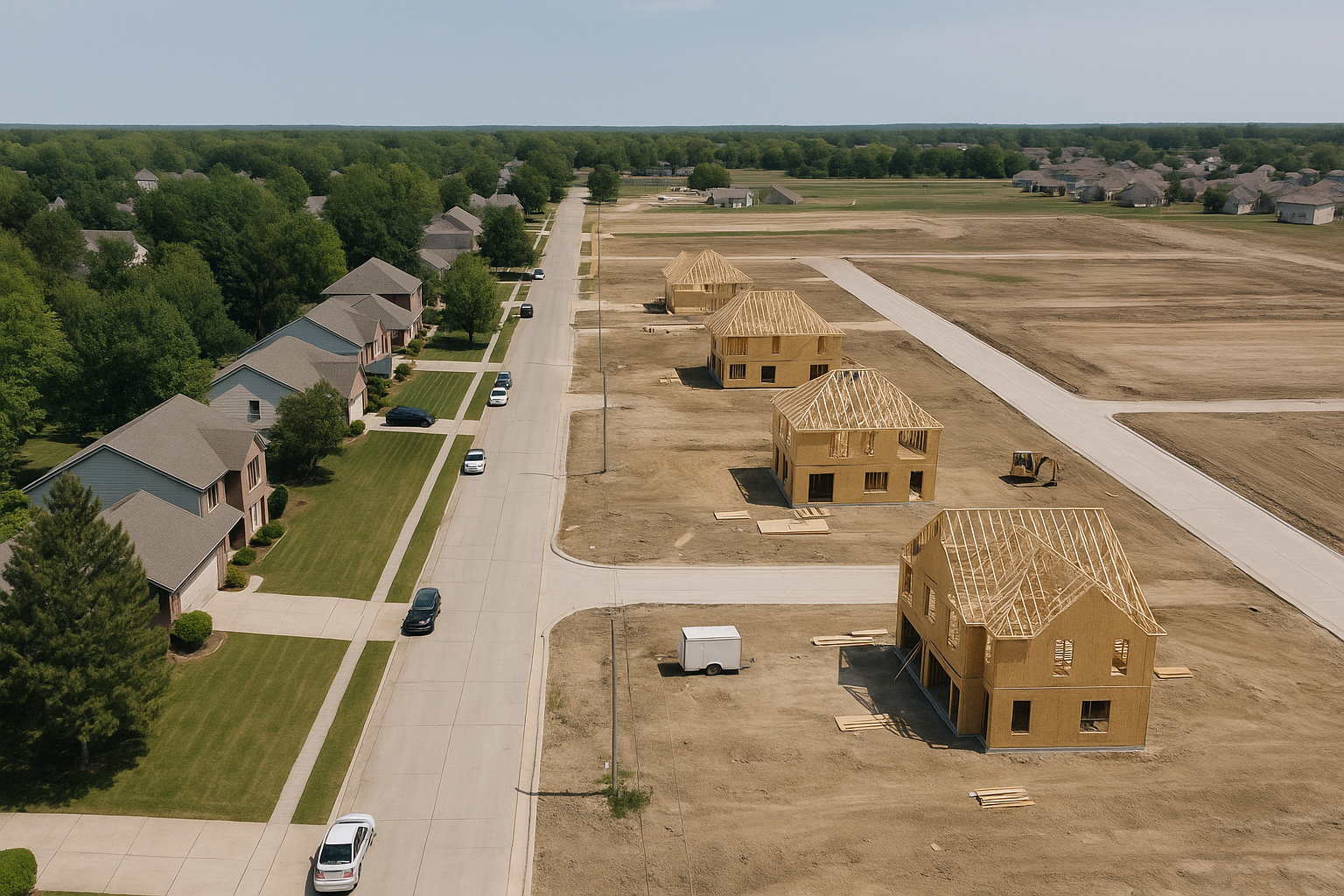
Two Saturdays teach you more about this decision than any portal search. On the first, you tour a model home east of I-69, every finish upgraded and a sales agent ready with answers. On the second, you walk a 1990s two-story in Noblesville under trees taller than the roofline. I sell both. I hold the Certified New Home Co-Broker (NHCB) designation, I live in New Palestine, and builder contracts fill much of my week. When buyers ask me to settle the new construction vs resale question for central Indiana, my first answer is that each side walks in carrying myths about the other: about timelines, warranties, upgrade pricing, lot premiums, and who represents you inside a model home.
The short version, side by side
Every builder writes its own contract; read the new-construction column as the common pattern rather than a promise.
| Question | Buying new construction | Buying resale |
|---|---|---|
| The price on the sign | A base price. Options, selections, and the lot premium land on top. | An asking price for the finished house you just walked. |
| The calendar | Months. Builds averaged 9.1 months in 2024 (U.S. Census Bureau). | Weeks from accepted offer to keys. |
| What negotiates | Base price moves least. Credits, options, and rate buydowns move more. | Price and repairs both negotiate while you still hold the money. |
| Across the table | A sales team employed by the builder. | A listing agent representing the seller. |
Contract structure summarized as of August 2026. Every builder's paperwork differs.
The calendar decides more arguments than price
Nationally, a single-family home took an average of 9.1 months to build in 2024. Homes built for sale inside builder communities ran closer to 7.6 months from permit to completion, and the Midwest sat at the national average (U.S. Census Bureau Survey of Construction, 2024). A resale runs on a different clock: accepted offer, inspection window, appraisal, keys a few weeks later.
The myth: "My contract date is a move-in date"
Many builder contracts estimate substantial completion and reserve the right to extend for weather, labor, and materials. Some carry an outside date that lets you cancel and recover your deposit; some carry none. Ask in writing before you sign, and plan a housing bridge if your lease ends on a fixed day.
There is also a third lane, and my practice is named for it. Builders complete inventory homes, often called spec homes, ahead of any buyer: current-code construction on a resale-style calendar. When a family needs a new house and school starts in six weeks, inventory is where we look first. The move-in-ready homes hub keeps a running view of that lane.
The money: base prices, upgrades, and lot premiums
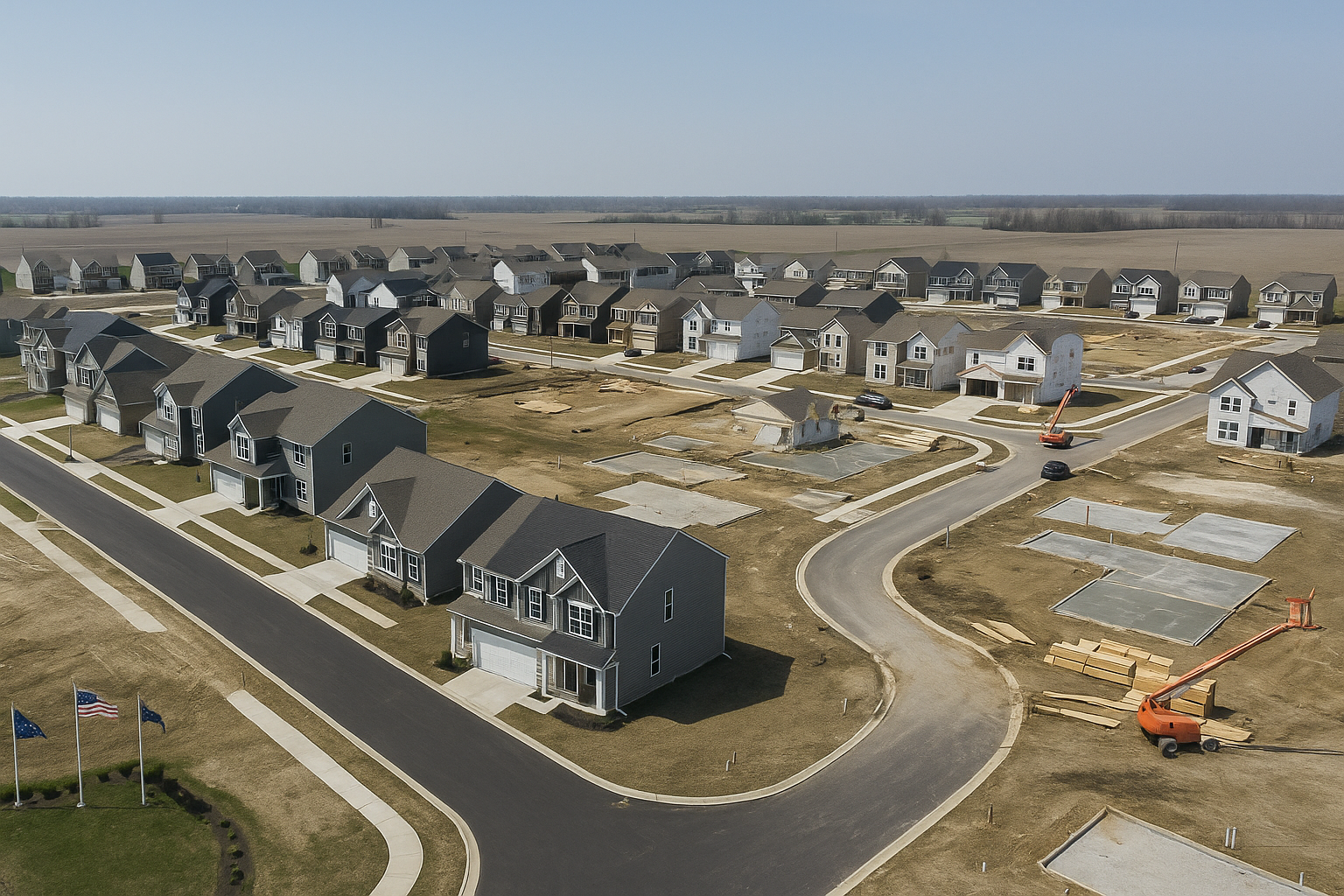
The model home is a showroom doing its job. It carries the upgraded elevation and the design-center finishes, so the sign price and your closing statement are separated by decisions you have yet to make. Two words govern that gap. An allowance is a budget line for a category, and anything above it is yours to pay. A change order is a written amendment after signing, with cutoff dates by construction phase; structural choices close first and finishes last.
The dirt carries its own price schedule too. Pond frontage, tree lines, and cul-de-sac positions commonly carry lot premiums, and a premium follows the house into every future appraisal. Builders defend the base price because a discount resets the comparable sales supporting the next dozen closings in that section. Closing-cost credits, design allowances, included options, and builder-funded rate buydowns move far more readily.
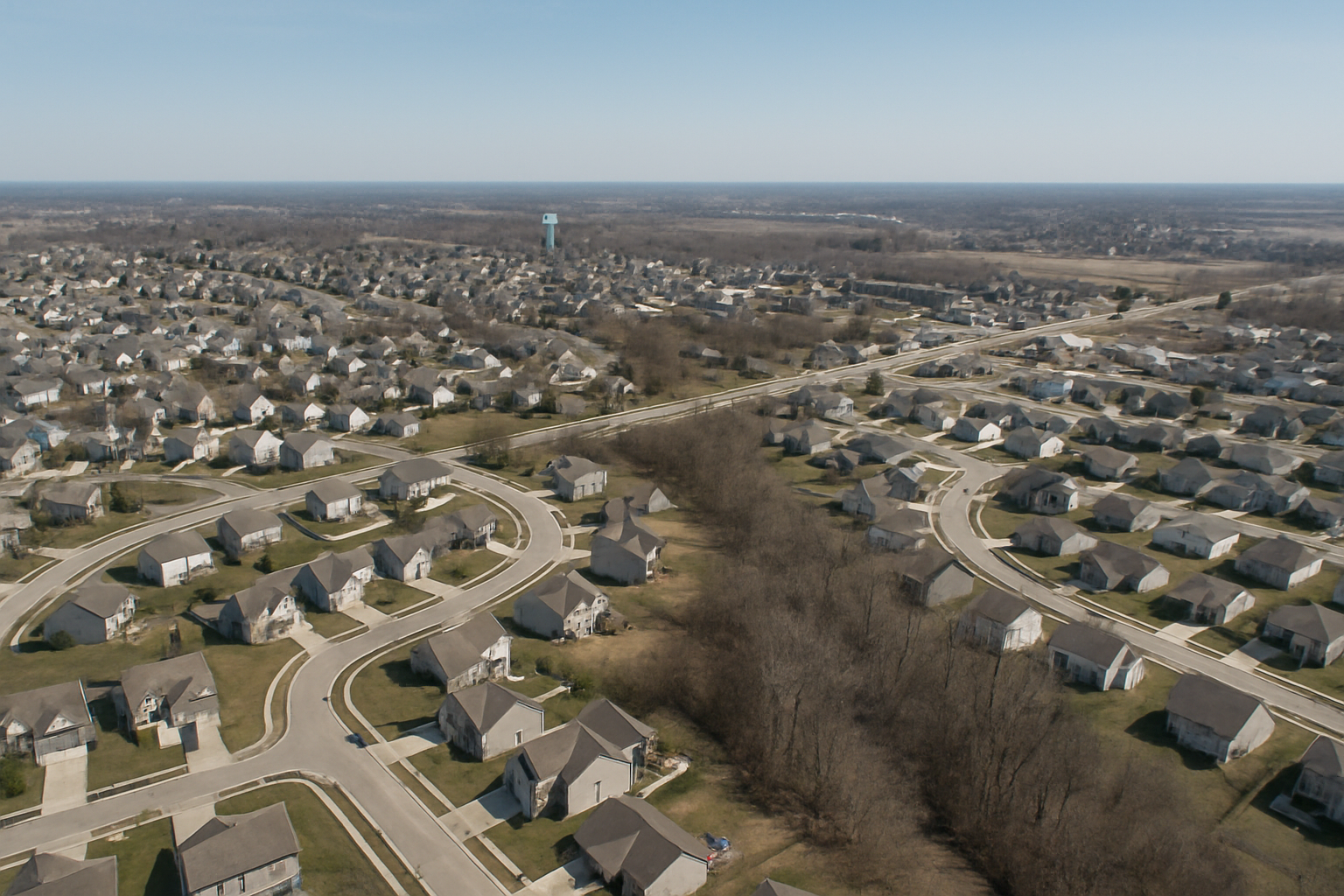
Supply explains the energy. NewHomeSource listed more than 200 active new-home communities in its Fishers search area in 2026, with Pulte, M/I Homes, Lennar, David Weekley, Drees, Fischer Homes, and Ryan Homes at work; the Fishers guide walks that corridor. Around New Palestine, Arbor Homes, D.R. Horton, Ryan Homes, Silverthorne Homes, and TK Constructors were building in late 2025, with area new construction starting near $203,000 (NewHomeSource, late 2025).
The taxing district is a quieter line item. In 2024, the New Palestine town district carried a rate of 2.2245 per $100 of assessed value while unincorporated Sugar Creek Township carried 1.8285 (STATS Indiana). New sections open on both sides of such lines; ask which district a lot sits in before comparing payments.
The myth: "Resale is automatically the cheaper way in"
Sometimes the sign price agrees. The finished numbers decide. A builder-funded rate buydown can move a monthly payment more than a modest price cut, while an older home may owe a roof or furnace within five years. Compare the all-in monthly cost and the five-year cost on both houses.
Warranties on one side, inspections on both
Indiana wrote its new-home warranty framework into statute. A builder may provide express warranties running two years on workmanship and materials, two years on plumbing, electrical, heating, cooling, and ventilation systems, four years on the roof, and ten years on major structural defects, and those warranties survive the passing of title (Indiana Code 32-27-2-8). Plenty of builders carry their own limited-warranty programs instead, so ask on the first visit which document governs your house, who administers claims, and what transfers if you sell.
The myth: "It is brand new and passed city inspection, so a private inspection wastes money"
Those are two different jobs. A municipal inspector confirms code compliance for the jurisdiction at set milestones. Your own inspector answers to you alone and reports on workmanship. On a new build I want three looks: pre-drywall, while wall cavities are open; a full inspection before closing; and a check near month eleven, while one-year warranty categories are still open. Photograph everything at the pre-drywall walk; you will want that file the day you chase a leak.
Resale inspections carry different leverage: you negotiate repairs or credits before closing, while the money is still yours. On a new build, later fixes route through the warranty process, so anything open on the punch list needs a written date before you accept the keys.
Who represents you at the model home
The person at the model-home desk is licensed, knowledgeable, and paid by the builder. None of that is a criticism; it is a job description. The contract on the clipboard came from the builder's attorneys, and the design center is built to make yes feel easy. Your representation has to come from somewhere else. My work as a Certified New Home Co-Broker sits exactly there: reading the contract early, pricing the option list in writing, and keeping the punch list alive after closing.
The rule that costs buyers the most: most builders recognize outside representation only when your agent accompanies you or registers on your first visit to that community. Walk in alone, sign the visitor sheet, and return later with an agent, and the builder may decline to recognize them. Text your agent the address before you open the door.
Where resale genuinely wins
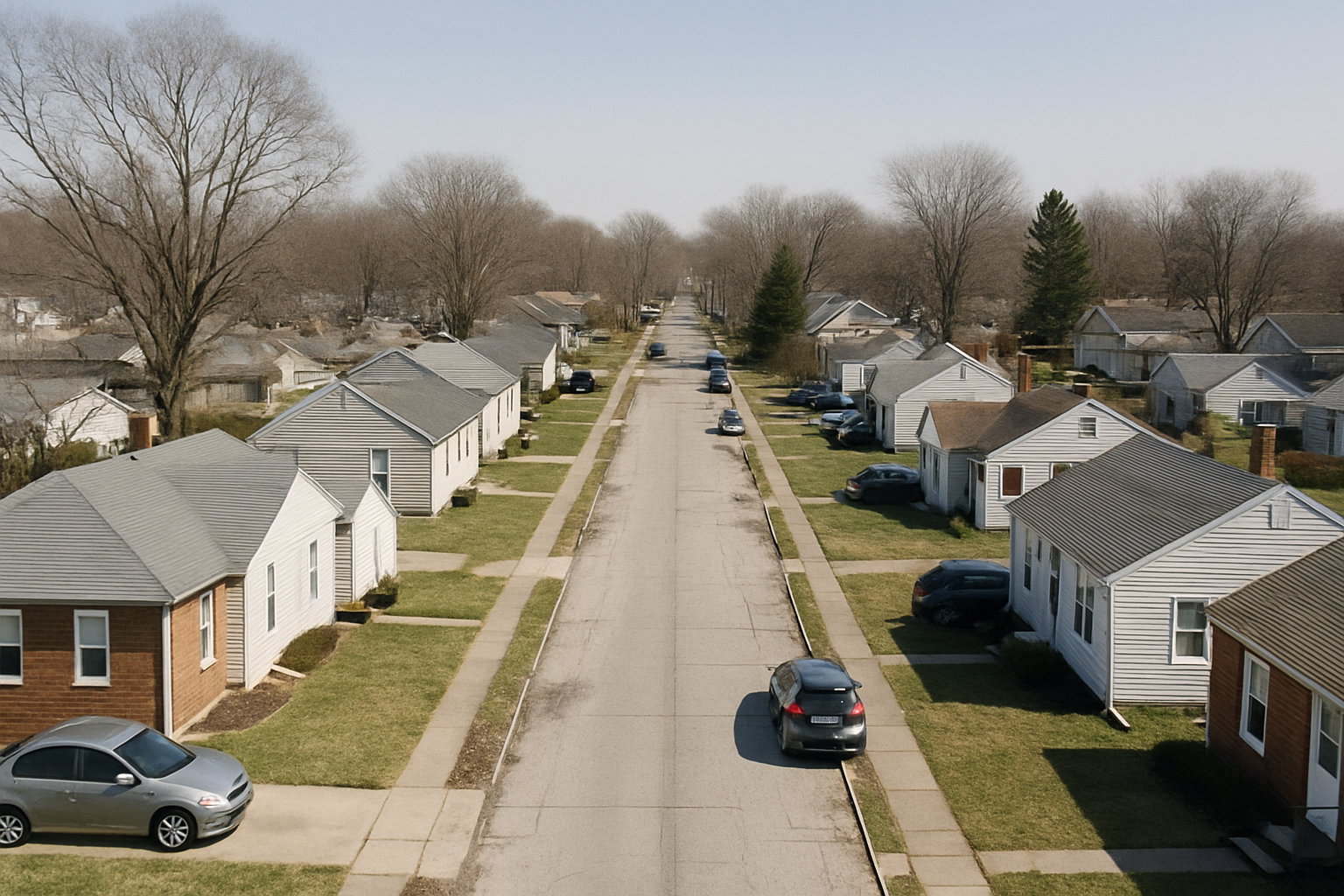
Fairness cuts both ways, and the resale side holds real cards. Mature trees head the list: a canopy that took thirty years arrives with the deed, and no option package can order one. The lot has seen decades of storms, so what the ground does with water is already visible. Sold comparables exist on the same street, and an established association has a budget history you can read.
Character is the quieter advantage. Production sections repeat a handful of plans by design, while older streets collected their variety one decision at a time. If you want a house unlike its neighbors, resale is usually where you find it; the older blocks near downtown Noblesville show it plainly (the Noblesville guide covers that market). Aging systems are the offset: roofs, furnaces, and water heaters run on lifespans, so price the next five years of components into the offer.
The myth: "They don't build them like they used to"
Some older construction is excellent, and some of it is a 1970s furnace wearing a new thermostat. Materials, methods, and codes changed in both directions. Judge the specific house through an inspector's report rather than judging an era through a slogan.
Jim's corner
Buyers ask which side of this I am on, and the answer is neither. I live in New Palestine, I work the metro from Fishers to Greenfield, and I close both kinds of purchases. The happiest buyers settle the question on their own facts: calendar, budget, appetite for decisions, and how much they care about trees. My job is to put the finished numbers side by side, read the paper before you sign, and say it plainly when the house you already like argues against you. That standard has a name here: "Be Served, Not SOLD!"
Frequently asked questions
Is new construction more expensive than resale in central Indiana?
Often on the sticker, and the gap narrows once you compare finished numbers. Area new construction around New Palestine started near $203,000 in late 2025 (NewHomeSource), while estimators put Fishers near $434,500 at the median sale (Redfin, March 2026) against a statewide typical value around $262,000 (Zillow, June 2026). Options, lot premiums, and incentives move individual houses far from every average, so price the specific pair with a current MIBOR pull.
How long does it take to build a new house in central Indiana?
Plan in months. Single-family homes nationally averaged 9.1 months to build in 2024, and homes built for sale inside builder communities ran closer to 7.6 months from permit to completion (U.S. Census Bureau Survey of Construction, 2024). Builder contracts usually estimate completion rather than promise a date, so ask whether an outside date exists in writing. Completed inventory homes shortcut the wait entirely.
What warranty comes with a new home in Indiana?
Indiana's new-home warranty statute defines express warranties a builder may provide: two years on workmanship and materials, two years on plumbing, electrical, heating, cooling, and ventilation systems, four years on the roof, and ten years on major structural defects, all surviving the passing of title (Indiana Code 32-27-2-8). Many builders carry their own limited-warranty programs instead, so read which framework your contract adopts and who administers claims.
Should I still get an inspection on a brand-new home?
Yes. A municipal inspector confirms code compliance for the jurisdiction, while a private inspector works for you and reports on workmanship. On a new build I want three looks: pre-drywall while the walls are open, a full inspection before closing, and a check near month eleven while one-year warranty categories are still open. On a resale, the inspection also carries negotiating leverage, because repairs get settled before closing.
Can I bring my own agent to a model home, and does it cost me more?
Bring one, and bring them early. Most builders recognize outside representation only when your agent accompanies you or is registered on your first visit, so text your agent the address before you walk in. At most communities the builder publishes a co-broker compensation offer as part of its marketing budget; confirm how it works at registration.
Which is the better buy right now, new construction or resale?
Neither wins as a category. New construction fits buyers who want current code, warranty coverage, and a house configured their way, on a calendar measured in months. Resale fits buyers who want mature trees, established streets, and repairs negotiated before closing. Move-in-ready inventory homes split the difference, delivering new construction on a short calendar. Decide on your own timeline, budget, and appetite for decisions.
Keep reading
Talk through both doors before you pick one
Send me the community or the listing address you are weighing. I will register you properly at any sales office, put a builder quote next to a resale comparable, and give you the math a brochure leaves out. The first conversation is easy, and I answer my own phone.
Data last verified: August 2026. Build-time figures from the U.S. Census Bureau Survey of Construction (2024 data, NAHB analysis); Indiana warranty periods from Indiana Code 32-27-2; builder activity from NewHomeSource (late 2025 for the New Palestine area, 2026 for Fishers); price snapshots from Redfin (March 2026) and Zillow (June 2026); district tax rates from STATS Indiana (2024). Figures change; confirm with a MIBOR pull and the named source. A specific contract still belongs in front of an Indiana real estate attorney.
Categories
Recent Posts