
New Home Builder and Financing Incentives in Central Indiana Explained
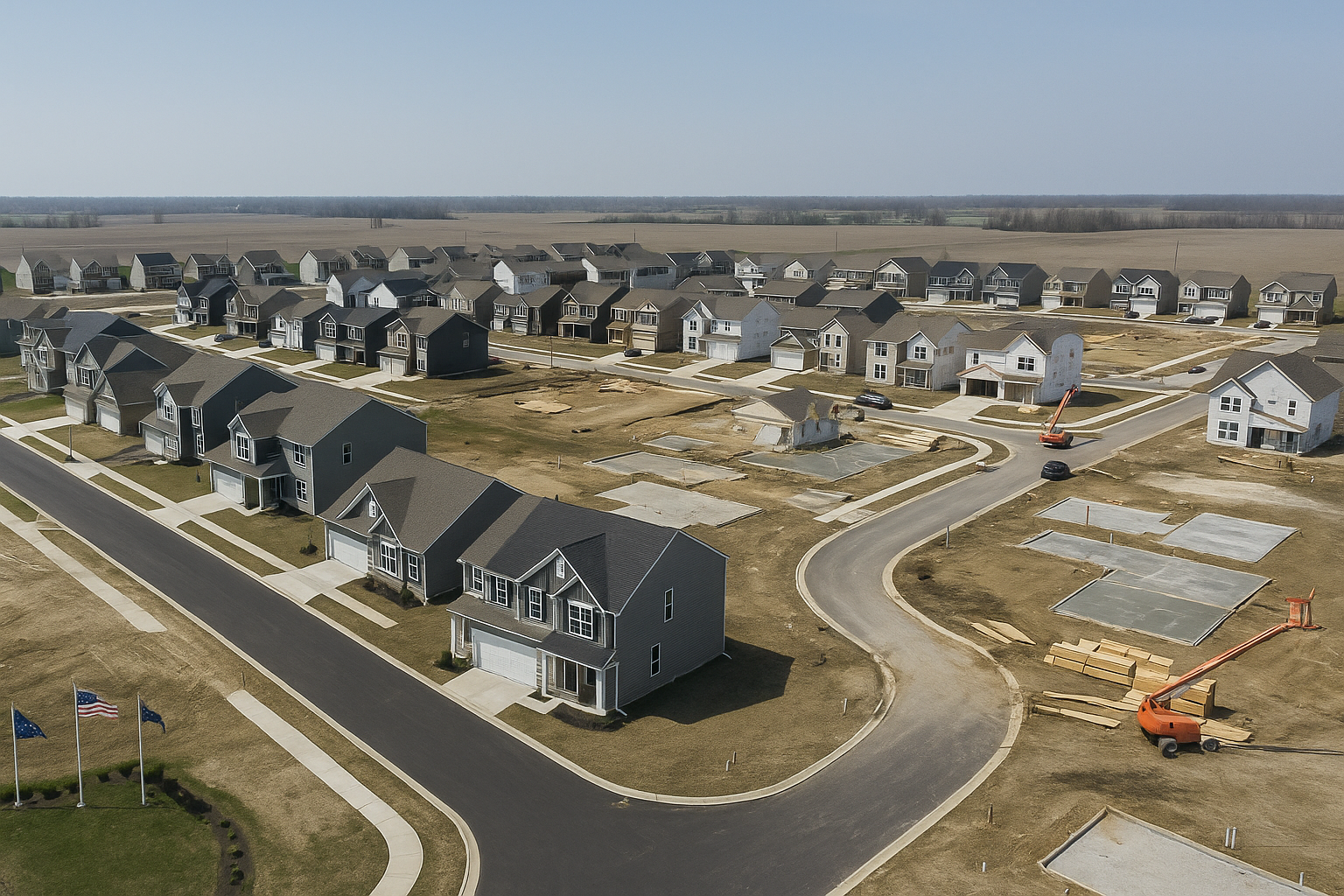
New Home Builder and Financing Incentives in Central Indiana Explained
Walk any model home corridor from Fishers to Bargersville and the offers find you before the floor plans do. A lower rate for two years. Thousands toward closing. A finished home priced below its neighbor. Every one of these new home builder incentives is real money, and every one is engineered to steer a decision. This guide explains how each category works and where the strings are, so you can compare offers on math instead of marketing.
Why Central Indiana builders are writing checks
A production builder is a manufacturer. Land is bought with borrowed money, crews are scheduled months ahead, and every finished house bills interest while it waits for a buyer. When sales slow, the assembly line cannot simply stop. Incentives are the release valve.
The numbers say the valve is wide open. In August 2026, 63 percent of builders nationally reported using sales incentives, while 35 percent cut prices outright at an average reduction of 6 percent (NAHB/Wells Fargo Housing Market Index, August 2026). Meanwhile new-home supply reached 9.6 months in July 2026 (U.S. Census Bureau, July 2026).
Central Indiana feels that pressure at a higher price point than many buyers expect. Median new-construction pricing in the Indianapolis metro ran $404,945 in the Indiana Business Review's Spring 2026 analysis, which also found almost nothing being built under $225,000. When the product costs more than half the metro can afford, incentive money becomes the bridge builders reach for first.
One more mechanism shapes these offers. Every recorded sale price becomes a comparable for the appraiser on the next contract in that community, so builders protect their comps. The money arrives as an incentive far more often than as a lower price.
Incentive and supply figures are national and current as of August 2026; the price figure is the Indianapolis MSA median new-construction price reported by the Indiana Business Review, Spring 2026. Every individual builder offer changes monthly and must be confirmed in writing.
Rate buydowns through the builder's lender
The flagship incentive of this market comes in two shapes. A permanent buydown pays discount points up front so your rate stays lower for the life of the loan. A temporary buydown lowers the effective rate for the first years only. In the common 2-1 structure, you pay as though the rate were two points lower in year one and one point lower in year two, and the full note rate applies from year three on.
Builders favor buydowns because a dollar spent on rate moves your monthly payment further than a dollar cut from price, and because the advertised payment is what fills a model home on Saturday. The recorded price, meanwhile, stays intact for the next appraisal.
Here is the string. The richest buydown offers are almost always conditioned on financing through the builder's affiliated or preferred lender. Federal settlement rules generally require that an ownership tie between a builder and a lender be disclosed to you. Those same rules generally prohibit making the home sale itself contingent on using that lender (CFPB, Regulation X). Conditioning the incentive on the lender, though, is standard practice, and it is where comparison shopping earns its keep.
Two moves protect you. First, get a same-day quote from an outside lender on the identical loan, because a below-market advertised rate can sit on top of higher fees. Second, stress-test a temporary buydown against the full note rate, since year three arrives on schedule. And ask what happens to the buydown money if closing slips past the rate-lock window; these offers are typically funded month to month, and the expiration date is part of the deal.
Closing-cost credits and design-center dollars
A closing-cost credit is builder money applied at settlement toward items like lender fees, title charges, prepaid taxes, and insurance. It lowers your cash to close rather than your loan balance. Loan programs cap how much an interested party can contribute toward your costs, and the cap varies by loan type and down payment. A large credit needs your lender's confirmation before you count on all of it.
Design-center and upgrade credits work differently. That money can only be spent inside the builder's own showroom, where upgrade pricing carries the builder's margin. A $10,000 allowance against showroom prices is genuinely useful, and it is still worth less to you than $10,000 in cash.
Both credit types usually carry conditions in the fine print: contract during the promotion window, close by a stated date, finance through the preferred lender. Read the addendum that grants the credit, because that document alone controls what you receive.
Quick move-in homes and the inventory clock
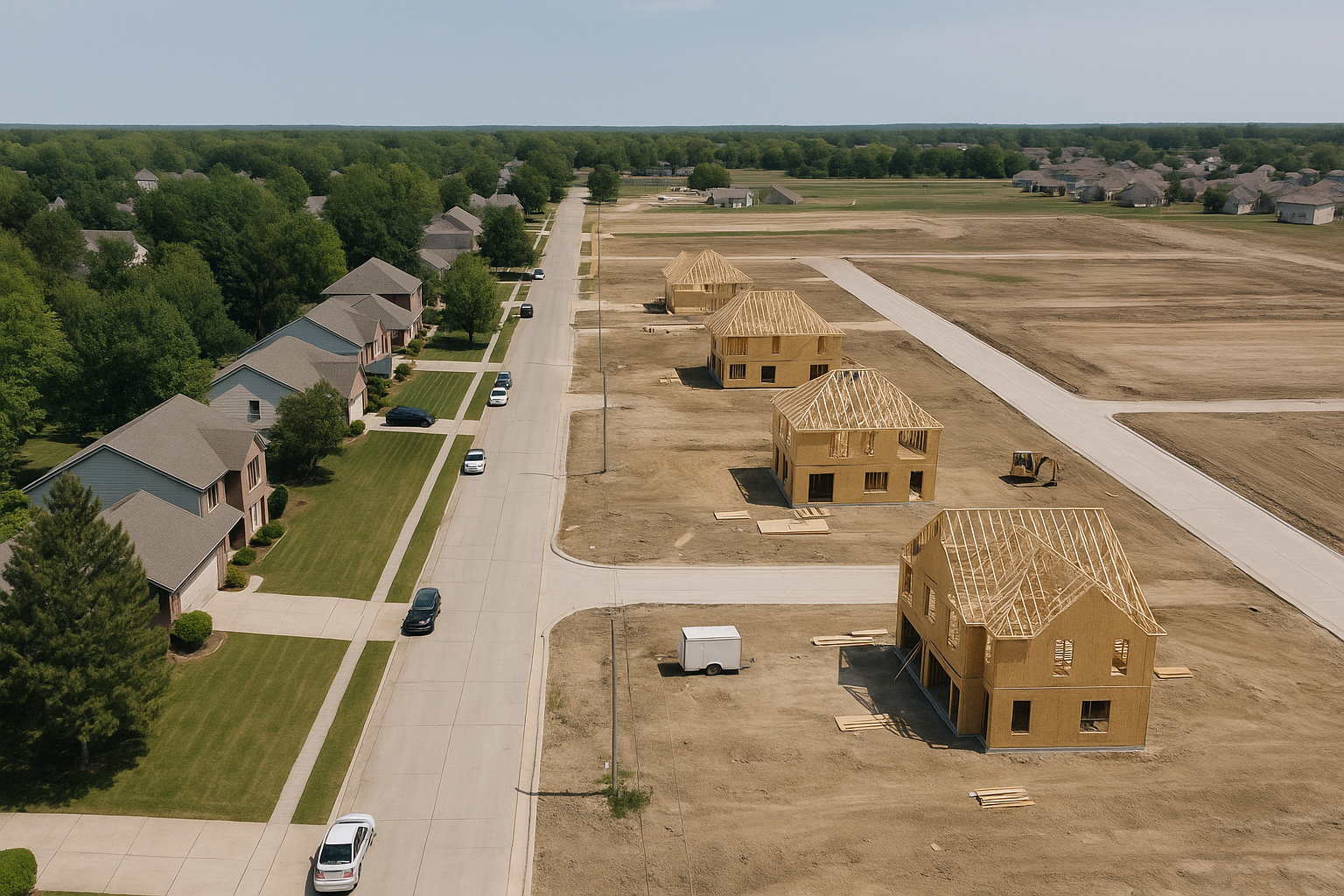
A quick move-in home, often called a spec or inventory home, is one the builder started before any buyer signed. Roughly 117,000 completed new homes were sitting for sale nationwide in July 2026 (U.S. Census Bureau), and each one bills its builder interest, taxes, and upkeep every month unsold.
That carrying cost is your leverage. Aging inventory attracts the deepest discounts and the richest incentive stacks, and the pressure rises near the end of a builder's quarter or fiscal year. The tradeoff is choice: colors, flooring, and structural options are already locked in, so you are shopping the builder's taste at a better price.
Around Central Indiana, inventory homes tend to appear wherever a builder runs several communities at once, from Hamilton County suburbs like Fishers and Noblesville to the Hancock County towns east of Indianapolis. The Fishers guide and the Noblesville guide on this site cover what those places are like to live in once the incentive conversation ends.
Lot premiums and the timing game
A lot premium is an extra charge for a specific homesite: a walkout basement, a pond view, a cul-de-sac, or a larger yard. The builder's sales office sets these prices, and they move with demand inside the community rather than with any outside market.
Timing is the whole game here. Builders often price early phases modestly to seed a community with sales, then raise base prices and premiums as sections fill. Late in a phase the pattern reverses, and the awkward lots that remain are where premium waivers quietly appear.
Spend the premium carefully. A pond or preserve lot can hold value at resale, while a premium paid for scarcity inside one phase can vanish once the next phase opens. Ask how many lots remain and when the next release gets priced, then decide whether the premium is buying geography or urgency.
Every incentive, its string, and the question to ask
Take this table to the model home. One clear answer per row tells you most of what the offer sheet leaves out.
| Incentive | What it really is | The usual string | Ask this |
|---|---|---|---|
| Permanent rate buydown | Builder-paid discount points on your loan | Funded only through the affiliated or preferred lender | What does an outside lender quote on the identical loan today? |
| Temporary 2-1 buydown | Lower effective payments in years one and two | Full note rate returns in year three, plus the lender condition | Can I comfortably carry the year-three payment? |
| Closing-cost credit | Builder cash toward settlement charges | Loan-program caps, promotion windows, lender condition | How much of this credit can my loan absorb? |
| Design-center credit | An allowance spent at showroom pricing | Redeemable only in the builder's showroom | What would this same selection cost outside the showroom? |
| Quick move-in discount | Price relief on a finished spec home | Finishes locked in, offer tied to a fast closing | How long has this home been complete? |
| Lot premium waiver | Premium dropped on remaining homesites | Usually the least popular lots in the phase | When does the next phase release, and at what price? |
My Take: Bring Your Own Advocate
I spend much of my week inside model homes and builder contracts, and I want to say something kind about the people who work there. The on-site counselor at a Central Indiana model home is usually excellent at the job. They know the product, they return calls, and they treat you well. They are also employed by the builder, and they represent the builder's interests in the transaction. That is the arrangement working exactly as designed.
My answer to that arrangement is simple: bring your own advocate, and bring one trained for this niche. I hold the Certified New Home Co-Broker designation (NHCB), which is specific training in builder contracts, on-site sales practices, and new-home pricing. When a buydown, a credit, and a lot premium land on the table at once, my job is to translate the stack into two numbers: your monthly payment and your cash to close. Then we compare that against the resale down the street.
If you already own a home here, read my companion piece on buying before you sell; builder deadlines and incentive expirations collide with sale timing constantly.
One note before your first visit. Many builders ask that your agent accompany or register you on the first model-home visit for representation to apply, and in many Central Indiana communities the builder compensates the buyer's agent. Confirm both in writing before you tour, because a five-minute call before Saturday protects choices you cannot get back on Monday. Be Served, Not SOLD!
New home builder incentives: common questions
What incentives are new home builders offering in Central Indiana right now?
Offers change monthly, so no list stays accurate for long. Nationally, 63 percent of builders reported using sales incentives in August 2026 (NAHB/Wells Fargo Housing Market Index). In Central Indiana the recurring categories are rate buydowns, closing-cost credits, design-center credits, quick move-in discounts, and reduced lot premiums. Ask each builder for the current written offer sheet with its conditions.
What is a builder rate buydown and how does it work?
A rate buydown is builder money used to lower the interest rate on your loan. A permanent buydown pays discount points so the rate stays lower for the life of the loan. A temporary 2-1 buydown lowers your effective rate by two points in year one and one point in year two before the full note rate applies. Builders usually fund buydowns only through their preferred lender, so compare against an outside quote.
Do I have to use the builder's preferred lender to get the incentives?
The largest incentives are usually conditioned on using the builder's affiliated or preferred lender, and that condition is the real price of the offer. Federal settlement rules generally require a builder to disclose an ownership tie with a lender and generally prohibit requiring that lender as a condition of the sale itself. Have an outside lender price the identical loan, then compare total cost over your expected years in the home.
Are builder incentives better than a price reduction?
It depends, because each tool moves a different number. A price cut lowers your loan balance and every future payment. A buydown or credit can deliver more monthly relief per builder dollar, which is one reason 63 percent of builders offered incentives in August 2026 while 35 percent cut prices (NAHB). Translate every offer into your monthly payment and your cash to close before deciding.
What is a quick move-in home and why is it discounted?
A quick move-in home, also called a spec or inventory home, is one the builder started without a buyer under contract. Roughly 117,000 completed new homes were for sale nationwide in July 2026 (U.S. Census Bureau). A finished home costs its builder money every month it sits, so aging inventory attracts the deepest discounts, especially near the end of a builder's quarter.
Do I need my own agent to buy a new construction home, and who pays for that?
The on-site sales counselor at the model home is employed by the builder and represents the builder's interests. You are generally free to bring your own agent to represent yours. In many Central Indiana communities the builder compensates the buyer's agent. Confirm compensation and registration rules in writing before your first visit, because some builders require your agent to accompany or register you on that visit.
Data verified August 2026 against the NAHB/Wells Fargo HMI, U.S. Census Bureau New Residential Sales (July 2026), the Indiana Business Review (Spring 2026), and CFPB Regulation X. Incentives and program rules change monthly and vary by community, loan type, and buyer; confirm every current offer in writing with the builder and a licensed lender.
About Jim
Jim Bardes is a REALTOR® with eXp Realty, based in New Palestine and working with buyers and sellers across Central Indiana. He holds the Certified New Home Co-Broker (NHCB) designation and represents buyers in builder transactions. Jim does no lending and gives no loan advice; confirm loan specifics with a licensed mortgage professional. Reach Jim at 317-442-1698 or jim@bardesrealty.com.
Move-in ready Central Indiana Book a new construction consultation
Categories
Recent Posts